
BTL marketing Kenya brands have navigated one of the most unpredictable first halves of the year in recent memory and the lessons are already clear for those paying attention.
In Kenya specifically, BTL marketing has been tested by a market that moved faster than most brands anticipated. Gen Z demonstrations disrupted activation calendars. FIFA World Cup 2026 timing shifts caught brands using the wrong playbook. Google’s AI changes reshuffled how consumers discover products online. And economic pressure continued to test marketing budgets across every category.
As we have worked with brands, observed campaigns and engaged with the market across Kenya and East Africa, five lessons continue to stand out. These are not predictions. They are patterns we have watched play out in real time on the ground, in the data, and in the conversations brands are having with their agencies right now.
At CMEM Group, these lessons are shaping how we design every activation brief connecting strategy, creativity and on-ground execution into one seamless consumer experience.
LESSON 1: VISIBILITY ALONE IS NO LONGER ENOUGH
- According to Nielsen, consumers are exposed to thousands of brand messages every day yet recall rates for passive advertising remain remarkably low. Billboards. Social posts. Pre-roll ads. Push notifications. Most of it disappears before the consumer reaches for their morning coffee.
The brands winning in Kenya right now are not the ones with the most visible campaigns. They are the ones creating experiences people can participate in, talk about and remember long after the activation has packed up and moved on.
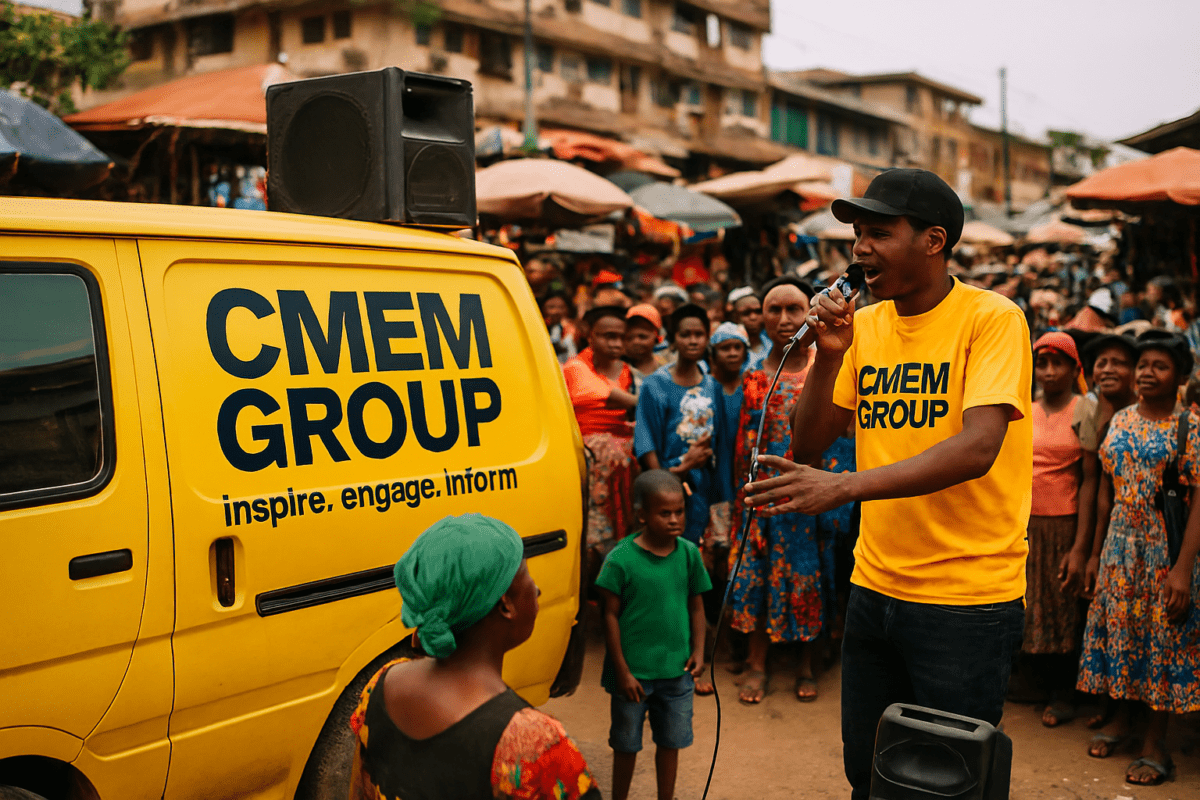
A strong example of this played out during a recent FMCG sampling campaign in Nairobi. Consumers who received a direct product sample from a trained brand ambassador showed significantly higher recall and trial conversion rates than those exposed to the same product through outdoor advertising alone. The physical interaction created a memory that passive advertising simply cannot create.
This shift is most visible in experiential marketing and brand activation, where the best campaigns are not just seen but felt. A consumer who experiences a brand directly, whether through a sampling activation, a live demonstration, or an immersive retail experience, builds a lasting connection that changes purchasing behaviour.
In BTL marketing, this principle has always been foundational. But in 2026, it has become the defining difference between campaigns that build market share and campaigns that burn budget.
Insight: Experience is becoming the new attention.
Read more on why experiential marketing builds stronger brand memory:
LESSON 2: ON-GROUND AND DIGITAL ARE NO LONGER SEPARATE
According to WARC, campaigns that combine physical activation with digital amplification consistently deliver higher brand recall than single-channel campaigns. The data reflects what we have been observing on the ground in Kenya the strongest campaigns are not running activation and digital in parallel. They are running them as one connected system.
The brands generating the best results are connecting on-ground experiences with digital content, influencer amplification, community engagement and performance marketing building campaigns where each channel feeds the others rather than operating in isolation.
A retail activation combined with creator content is a clear illustration. When a brand ambassador creates a live product moment in-store and that moment is captured and distributed through a content creator’s audience, the activation continues generating engagement online for days after the physical experience has ended. The physical creates the moment. The digital multiplies it.
For BTL marketing Kenya agencies and their clients, this integration is no longer a nice-to-have. It is the operating model that consistently outperforms single-channel approaches.
At CMEM Group, every activation brief we receive is now evaluated through both lenses what happens on the ground and how it extends into digital. The two are inseparable.
Insight: Physical creates the moment. Digital extends the moment.
Read our breakdown of how BTL and digital work together in 2026
Digital Marketing
LESSON 3: SPEED HAS BECOME A COMPETITIVE ADVANTAGE
The Kenyan market has changed rapidly in the first half of 2026.
Demonstrations disrupted activation calendars with little warning. During the disruption periods, several brands that had built flexibility into their activation plans successfully pivoted field teams from affected CBD locations to county-level retail activations maintaining campaign momentum while competitors went dark entirely. The brands that moved fast protected their visibility. The ones that waited lost ground they are still trying to recover.
FIFA World Cup 2026 timing shifts presented a similar challenge. With 52 of 104 matches kicking off between midnight and 6AM in Kenya, brands using the same activation playbook as Qatar 2022 found their timing completely misaligned with actual consumer behaviour. The brands that identified this early and repositioned around late-night viewing occasions and morning-after consumer moments consistently outperformed those that didn’t.
Planning remains essential. A well-structured activation calendar, a county-level risk map, and a clear brief are non-negotiable. But in 2026, agility is equally valuable. The brands that built flexibility into their activation plans consistently extracted more value from disrupted periods than those that simply paused and waited.
Speed of response is now a measurable competitive advantage in BTL marketing Kenya campaigns and it is one that requires both the right agency infrastructure and the right client mindset.
Insight: The market rewards brands that adapt.
Read how brands should navigate demonstrations and civil unrest
Field Marketing
LESSON 4: CONSUMERS EXPECT AUTHENTIC EXPERIENCES
Kenyan consumers are becoming significantly better at recognising marketing that feels forced, transactional, or disconnected from their reality.
According to Edelman’s Trust Barometer, trust has become one of the most important factors in consumer brand choice and that trust is built through experience and consistency, not advertising frequency. In Kenya, where word of mouth and community recommendation carry disproportionate influence, authenticity in brand interaction is not optional.
Two campaigns that illustrate this principle in the Kenyan market though without publicly available performance data are the Rosy Tissue partnership with Akothe and Sta Soft with Size 8. In both cases, consumers responded to what felt like a genuine recommendation from a trusted voice rather than a traditional advertising message. Whether or not those specific campaigns delivered measurable uplift beyond anecdotal engagement, the underlying principle they demonstrate is consistent with broader industry evidence: consumers engage more deeply when a brand interaction feels human and relevant.
The same principle applies at the field level. A brand ambassador who knows the product deeply, speaks the local language, and engages genuinely will convert more consumers in one afternoon than a week of passive shelf display. What works in Westlands may need a completely different approach in Kisumu or Garissa. The brands investing in local intelligence are consistently building stronger brand affinity than those rolling out generic national campaigns.
Consumers remember how brands made them feel. Not what brands told them.
Insight: Engagement creates stronger loyalty than exposure.
Why Kenyan consumers trust people more than brands
Brand Activation
LESSON 5: MEASUREMENT IS BECOMING NON-NEGOTIABLE
The conversation between brands and their BTL marketing Kenya agencies has shifted significantly in 2026.
According to the Chartered Institute of Marketing, marketing directors are facing increasing pressure from boards and finance teams to demonstrate clear ROI from below-the-line marketing spend. In Kenya, this pressure is being felt acutely particularly as economic conditions tighten and every budget line faces scrutiny.
Clients are no longer satisfied with post-campaign photograph packs and attendance numbers. They want to understand what the activation actually delivered in commercial terms.
The metrics that matter now:
- Consumer insights gathered during activation
- Quality of engagement and conversion rates at the point of interaction
- Leads generated and followed up
- Sales impact at outlet level during and after the activation period
- Return on investment that can be defended in a boardroom
Execution remains important. A poorly executed activation with strong measurement is still a poor activation. But a brilliantly executed campaign with no measurement framework leaves the brand unable to justify the investment, optimise future spending, or build on what worked.
At CMEM Group, measurement is built into every activation framework from the brief stage not added as an afterthought at the end. Because great BTL marketing should be both memorable and measurable.
Insight: Great marketing should be both memorable and measurable.
How modern BTL must prove ROI
BTL Marketing
OUR REFLECTION
Halfway through 2026, one thing has become increasingly clear.
The future belongs to brands that connect strategy, creativity, on-ground execution and digital engagement into one seamless consumer experience. Not brands that treat each channel as a separate budget line with separate objectives and separate agencies.
Marketing is evolving. Consumers are evolving. The operating environment in Kenya is evolving faster than most planning cycles can accommodate.
Which of these five shifts has had the biggest impact on your marketing strategy in 2026? We would love to hear what you are seeing on the ground.
As brands plan for the second half of 2026 and prepare for an increasingly dynamic 2027, the winners will be those who combine insight with execution. If you are rethinking your activation strategy, we would be happy to explore what that could look like together.

 Centro Insights