
There is a principle in marketing that is older than any algorithm, any platform, and any campaign strategy ever devised.
People trust people.
Not logos. Not taglines. Not beautifully produced television commercials. People.
And in Kenya, where community, word of mouth, and personal recommendation carry enormous social weight, this principle doesn’t just hold; it dominates. It shapes how consumers discover products, how they decide what to buy, and how they build loyalty with brands over time.
The brands that understand this are winning. The ones that don’t are spending more and getting less.
THE MOST POWERFUL MARKETING MOMENT OF 2026 HAD NO CAMPAIGN BEHIND IT
On 26 April 2026, Kenyan runner Sabastian Sawe crossed the finish line of the London Marathon in 1:59:30.
He became the first man in history to run a sub-two-hour marathon in an officially sanctioned race. The entire running world stopped. Social media erupted. News channels led with it.
He was wearing the Adidas Adizero Adios Pro Evo 3.
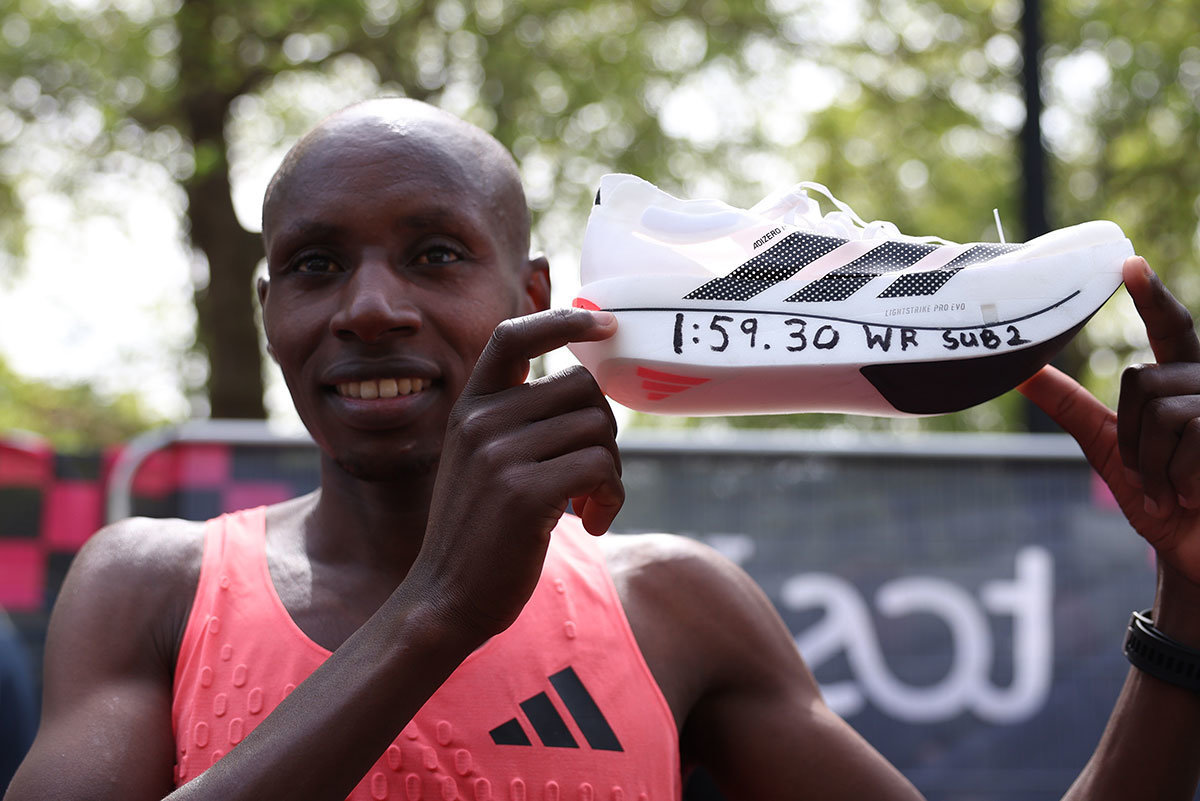
The shoe sold out within minutes of its release. The resale price hit $2,627 on StockX. Adidas shares climbed. And the brand generated what analysts described as one of its biggest product moments in years.
Without a campaign.
No billboards. No pre-roll ads. No influencer brief. No media buy. Just a Kenyan athlete performing at the highest level in human history and a brand that had the intelligence to put its product on his feet at exactly the right moment.
Sabastian Sawe didn’t just endorse Adidas. He became the proof. And proof is the most powerful marketing asset that exists.
No amount of advertising spend can manufacture what he delivered in 1 hour and 59 minutes in London.
JORDAN DIDN’T SELL SHOES. HE BECAME THE BRAND.
This is not a new phenomenon. It is a pattern that the most successful brands in history have understood and built entire strategies around.
When Nike signed Michael Jordan in 1984, it was a calculated bet on a person, not a product. At the time, Nike was struggling. The deal was considered a risk. Jordan wasn’t yet the global icon he would become. But Nike saw something in a person whose story, whose work ethic, whose brilliance on the court would make every product he touched feel different.
Jordan wasn’t promoting a shoe. He was living a story that millions of people wanted to be part of. Every championship. Every record. Every defining moment of his career the shoe was there. Inseparable from the man.
Today, the Air Jordan brand generates over $5 billion annually. Not because of advertising. Because of the trust, admiration, and emotional connection that one person built with a global audience over decades.
The shoe became inseparable from the man. And the man was trusted in a way no brand, no matter how well funded, could ever replicate on its own.
IT WORKS THE SAME WAY IN NAIROBI
You don’t have to look to global superstars to see this principle at work. It is playing out right now in the Kenyan market in supermarket aisles, on social media timelines, and in living rooms across the country.
The reason is simple Kenyan consumers trust people more than brands, and these partnerships understand that truth better than any media campaign ever could
Rosy Tissue partnered with Akothe. A product that could easily be lost in the noise of a crowded FMCG shelf suddenly had a face, a personality, and a community behind it. Consumers who follow Akothe didn’t just see an ad; they saw a person they trust recommending something. That is a fundamentally different kind of influence. It bypasses scepticism. It feels personal. It converts.
Sta Soft partnered with Size 8. A fabric softener found its way into conversations, content, and households that traditional advertising alone would never have reached. Size 8’s audience didn’t feel marketed to; they felt spoken to by someone they know, someone whose values and lifestyle they relate to.
In both cases, the product didn’t change. The distribution didn’t change. The price didn’t change.
The trust transfer did. And that changed everything.
BUT IT DOESN’T HAVE TO BE A CELEBRITY
This is where most brands miss the bigger opportunity.
The trust principle doesn’t require a famous face. It requires a familiar one.
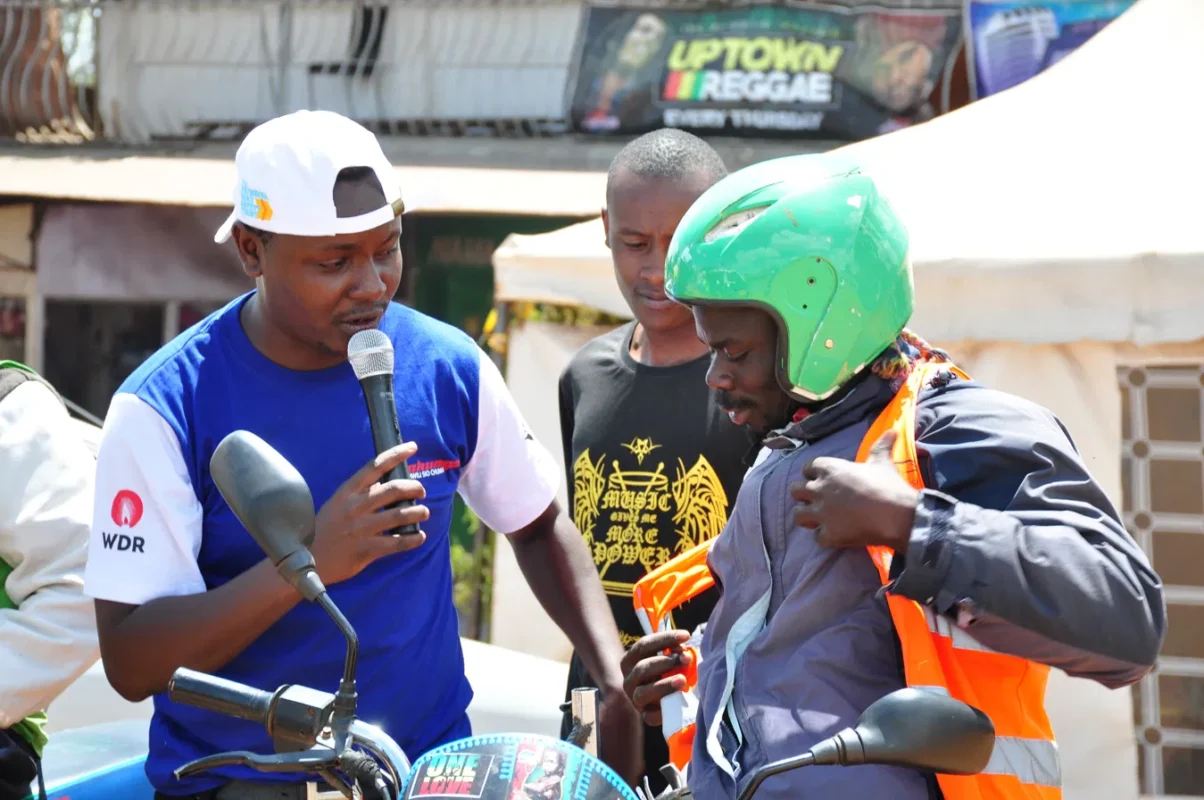
Walk into a supermarket in Nairobi, Nakuru, Kisumu, or Mombasa on an activation day. A well-trained brand ambassador — someone who knows the product inside out, speaks the local language, understands the neighbourhood, and engages genuinely — will convert more consumers in one afternoon than a week of passive shelf display.
Why? Because they are human. They can answer a question. Handle an objection. Offer a sample. Demonstrate a product in real time. Make someone laugh. Relate to a shopper’s life in a way that a poster on a shelf simply cannot.
They create a moment. And moments stay in memory long after the activation has packed up and left.
This is what field agents do that no digital ad ever can.
A Safaricom field agent explaining a new data bundle to a mama mboga in Gikomba is more persuasive than a billboard on Mombasa Road — because she can ask questions, get answers, and make a decision based on a real conversation. A Unilever brand ambassador sampling Royco in a supermarket aisle closes more trial than a television commercial — because the consumer experiences the product rather than hearing about it. A well-deployed promoter at a Total service station builds more brand loyalty through one genuine interaction than a month of social media posts — because the connection is human and immediate.
Consider what happens during a well-executed in-store activation. A shopper approaches, hesitant. They have seen the product on the shelf before but never tried it. The brand ambassador smiles, offers a sample, explains what makes it different, and answers the one question the shopper was too shy to ask. That shopper walks away with a product in their hand and a memory of a person who made them feel seen.
That memory is what brings them back.
No algorithm creates that. No banner ad replicates it. No celebrity endorsement delivers it at the individual level. Only a trained, motivated, well-deployed human being can produce that moment at scale, across hundreds of outlets, week after week.
That is the power of field marketing when it is done properly. And in a market like Kenya, where personal relationships and community trust drive purchasing behaviour more than almost anywhere else in the world, it is one of the most effective tools available to any brand.
WHY THIS WORKS: THE PSYCHOLOGY BEHIND IT
There is a reason human-led marketing consistently outperforms passive advertising, and it is rooted in how people actually make decisions.
We are wired to trust people we know, admire, or relate to. Psychologists call it social proof. Marketers call it influence. In Kenya, we call it word of mouth, and it has always been the most powerful force in consumer behavior in this market.
When a brand communicates through a person, we have a connection with whether that is a celebrity, a community figure, a brand ambassador, or a field team member on the ground; the message carries emotional weight that a logo simply cannot generate on its own.
This is why:
- A brand ambassador sampling a product in a supermarket converts more effectively than a shelf display alone because human interaction reduces uncertainty and drives trial.
- A field team member who engages, explains, and demonstrates creates a memory that a billboard cannot because the brain stores experiences differently from passive observations
- A consumer who receives a recommendation from someone they relate to acts differently from one who sees an ad, because trust bypasses the scepticism that advertising automatically triggers
- A well-briefed promoter who understands the brand deeply communicates authenticity that scripted advertising cannot because consumers can feel the difference between someone who believes in a product and someone who is paid to hold it
The common thread across all of these is human presence. Real people, in real moments, creating real trust.
And in a world where consumers are increasingly suspicious of advertising, increasingly immune to digital noise, and increasingly reliant on personal recommendations, human presence is becoming more valuable, not less.
WHAT THIS MEANS FOR HOW BRANDS SHOULD THINK ABOUT ACTIVATION
If consumers trust people more than brands, then the most strategic marketing investment a brand can make is not a bigger media budget. It is putting the right people in front of the right consumers at the right moment.
This means investing in the quality of brand ambassadors not just their numbers. A hundred poorly briefed promoters will underperform ten deeply trained ones every time.
It means designing activations around genuine consumer engagement not just product placement and branded uniforms. The goal is a conversation, not a transaction.
It means measuring the right things not just footfall and samples distributed, but conversations initiated, objections handled, trials converted, and repeat purchases tracked.
And it means treating field teams as strategic assets because in many categories, the brand ambassador is the most direct and influential touchpoint between the brand and the consumer. What they say, how they say it, and how they make a consumer feel is the brand experience.
The brands winning in Kenya right now are not the ones with the biggest media budgets. They are the ones who have figured out how to make their brand feel human through the people who represent it, activate it, and bring it to life in the real world.
Read more on why experiential marketing builds stronger brand memory than messaging alone: https://cmemgroup.com/experiential-marketing-5-reasons-consumers-never-forget-your-brand/
And how BTL execution must be measured for real commercial results: https://cmemgroup.com/how-modern-btl-must-prove-roi/
THE LESSON FROM SABASTIAN SAWE
Adidas didn’t need a campaign because Sabastian Sawe was the campaign.
The most powerful marketing isn’t always built in a boardroom or a creative agency. Sometimes it is built on a track in London, in a supermarket aisle in Nairobi, or in the hands of a person your consumer already trusts.
In Kenya, where community influence runs deep and personal recommendation carries more weight than any media placement, the brands that invest in human led marketing will always have an edge over those that rely on reach and impressions alone.
Because in the end, people don’t just buy products.
They buy who they trust.
And that has never changed and never will.
IS YOUR BRAND SHOWING UP IN THE RIGHT PLACES — WITH THE RIGHT PEOPLE?
At CMEM Group we deploy trained brand ambassadors and field teams across Kenya and East Africa to drive real consumer engagement and measurable conversion. From supermarket activations to roadshows, trade marketing to experiential campaigns, we put the right people in front of your consumers at the right moment.
Let’s talk about your next activation.

 Centro Insights