

Experiential marketing is changing how brands build memory — and most businesses haven’t caught up yet.”
Think about the last ad you saw. Can you remember it?…
If you’re struggling, you’re not alone — and that’s exactly the problem brands are facing right now.
We’re not in a visibility crisis. We’re in a memory crisis.
Modern consumers are exposed to thousands of marketing messages every day. Billboards. Social posts. Pre-roll ads. Sponsored content. Push notifications.
Most of it vanishes within seconds. Not because brands are invisible — but because attention has become temporary. The human brain, overwhelmed by the volume of it all, has developed a ruthless filter: if it doesn’t feel like anything, it doesn’t get stored.
And that changes everything about how influence works.
Reach was never the finish line
For decades, marketing strategy was built on one idea: the more people see you, the more they trust you. More reach. More impressions. More awareness.
And for a long time, it worked.
But the environment has shifted. Attention spans have shortened. Platform fatigue is real. Ad saturation has hit critical mass. And perhaps most telling — the emotional connection people once had with traditional advertising has quietly eroded.
People are seeing more content than ever. They’re remembering less of it than ever.
So the question is no longer “how do we get in front of more people?”
It’s “how do we actually stay with them?”
Here’s what the brain actually remembers
A consumer can scroll past a hundred ads and forget all of them by the time they reach for their morning coffee.
But they rarely forget:
- The moment they tried a product for the first time and it worked
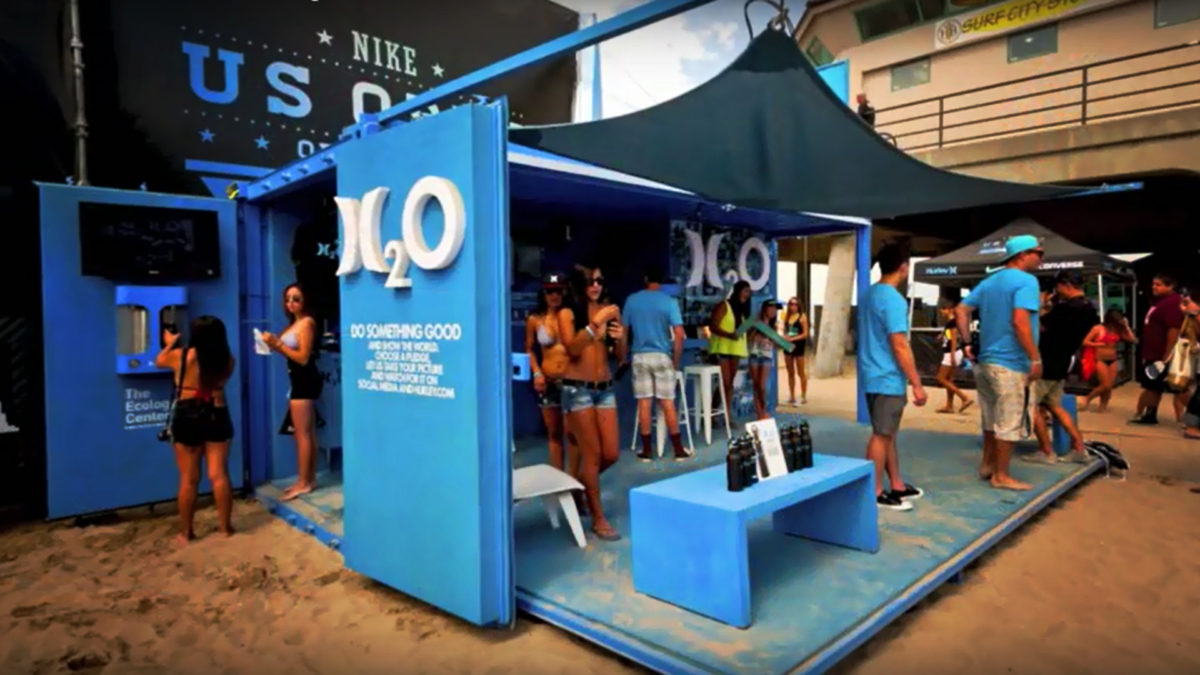
- The activation that made them stop walking and pay attention
- The brand that spoke directly to them — not at them
- The live experience that felt designed specifically for people like them
Why? Because experience activates emotion. It demands participation. It engages the senses. And sensory, emotional memory is the kind that actually influences future decisions — the kind that shows up at the point of purchase, long after the campaign has ended.
This is why experiential marketing isn’t a trend. It’s a behavioural truth.
The psychology holds across every industry
The mechanics look different. The psychology doesn’t.
In FMCG, a sampling activation removes doubt and accelerates trial. The consumer doesn’t have to imagine whether they’ll like it — they already know.
In automotive, a test drive creates emotional ownership before a single contract is signed. People buy the memory of how it felt to drive it.
In oil and energy, trust isn’t built through a campaign — it’s built through consistent, personal service interactions that compound over time.
Different industries. Different touchpoints. Same human behaviour.
People trust what they have experienced far more than what they have been told.
Activation is no longer a tactic. It’s a strategy.
Brands that understand this have stopped treating experiential as a line item in the events budget. They’re building it into the core of how they go to market.
Because a well-designed activation isn’t just an experience — it’s a visibility tool, a trust-builder, a conversion layer, and a real-time source of consumer intelligence all at once.
The strongest activations are engineered to do several things simultaneously: create lasting emotional memory, increase physical and sensory engagement, shorten the path to purchase, and reinforce brand recall long after the moment has passed.
That is a different kind of power than passive awareness alone.
So where does this leave us?
Consumers aren’t harder to reach. They’re harder to move.
They’ve grown selective — not because they’ve stopped caring about brands, but because they’ve been let down by too much noise and not enough substance.
The future of marketing isn’t simply digital. It isn’t simply physical.
It’s experiential.
Because in the end, people may forget what they saw.
But they will always remember what they felt.
CMEM Group is a BTL marketing and brand activation agency helping brands create experiences that move people. Based in Nairobi, we work across East Africa.

 Centro Insights