
The Gen Z Equation: Understanding East Africa’s Next Generation of Consumers
Beyond money, trends and social media: how a new generation is changing the rules of consumption, brand relationships and market behaviour.
- East Africa
- Consumer Behaviour
- Market Intelligence
- 2026 Perspective
Gen Z Consumers East Africa is now one of the most important questions in the market. East Africa’s next consumer generation is already influencing how businesses sell, communicate, build products and compete. Yet many organisations may still be approaching young consumers through assumptions formed around an older marketplace.
Gen Z has become one of the most discussed consumer groups in Kenya. From digital platforms and financial services to fashion, entertainment, food, retail and technology, the generation is changing how brands think about relevance and engagement.
But there is a problem with the conversation. Too often, Gen Z is reduced to social media habits, viral trends, protest culture or a supposed preference for instant gratification. These observations may capture fragments of behaviour, but they do not explain the wider consumer behind them.
To understand this generation, organisations must look beyond what young people post, watch or share. They need to understand how they earn, spend, save, aspire, socialise, discover products and make decisions.
A Generation Coming of Age
Gen Z is entering adulthood, the workforce and the consumer economy at a time when digital access, economic pressure and social expectations are changing rapidly. They are not entering the same marketplace that shaped the decisions of previous generations.
In Kenya, World Data Lab estimated that more than 17 million people belonged to Gen Z in 2025. Its consumer spending model projected that this generation would account for approximately KSh 4.4 trillion in annual spending.[1] That is an important commercial signal: this is not a small niche audience waiting to become relevant. It is already part of the market.
Estimated Gen Z population in Kenya in 2025.
Source: World Data Lab estimate, 2025.Projected annual consumer spending attributed to Kenya’s Gen Z in 2025.
Modelled estimate, not a measure of disposable income.These figures should change how organisations think about the generation. Gen Z is not simply tomorrow’s consumer. It is already participating in today’s spending decisions, influencing household purchases and shaping demand across several categories.
However, population size and spending estimates do not tell us everything. They do not explain who has purchasing power, who depends on family support, who is employed, who runs a small business or who is navigating irregular income. Those distinctions matter when developing products and marketing strategies.
The opportunity is not simply to reach a younger audience. It is to understand the economic and cultural realities shaping its decisions.
The Market Behind the Numbers
One of the biggest mistakes organisations can make is treating Gen Z as a single, uniform consumer segment. Age may provide a starting point for segmentation, but it does not explain purchasing power, lifestyle, access or aspiration.
A university student in Nairobi, a young entrepreneur in Kampala, a salaried professional in Kigali and a small business operator in Dar es Salaam may share some generational characteristics. Their daily financial realities, access to products and expectations of brands can nevertheless be very different.
Even the definition of youth varies across East Africa. Kenya’s constitutional definition covers people aged 18 to below 35, Uganda generally defines youth as 18 to 30, Tanzania uses 15 to 35, while Rwanda’s current national youth policy defines youth as 16 to 30.
Gen Z is a generational category, while youth is a policy and statistical category. They should not be treated as interchangeable. Nor should research using different age brackets be compared as though it measures exactly the same population.
Generational segmentation tells us when someone was born. Consumer intelligence helps explain how they live, what they can afford, what they value and why they make particular decisions.
A Different Relationship With Money
Money is one of the most important lenses through which to understand Gen Z, but the discussion should extend beyond banking and financial products.
For some young consumers, financial decisions are shaped by formal employment and predictable salaries. For others, income may come from freelance work, small businesses, online services, casual employment, commissions or several activities at once.
This creates different relationships with saving, borrowing, investing, insurance and spending. A consumer with irregular income may value flexibility and immediate access to funds differently from someone receiving a monthly salary.
Kenya’s 2024 FinAccess research offers an important reminder that access does not automatically translate into financial wellbeing. Formal financial access reached 84.8% of adults, yet the survey also identified financial exclusion, debt distress and continuing challenges in financial health.[2]
Of Kenyan adults had access to formal financial services in 2024.
CBK, KNBS and FSD Kenya, FinAccess 2024.Of Kenyans were classified as financially healthy in the 2024 survey.
FinAccess 2024 findings.FSD Kenya’s youth cohort analysis also shows why age and gender matter. Among those aged 21 to 23, formal account ownership among young men increased from 25% in 2021 to 37% in 2024. For young women in the same age range, the use of informal financial products declined from 56% to 48%, without a matching increase in formal financial product uptake.[3]
These findings raise questions for banks, SACCOs, insurers, fintechs and investment providers. Are their products designed around the financial realities of younger customers? Do their minimum balances, documentation requirements, repayment structures and communication approaches reflect the way young people earn and manage money?
But the implications go further. A young consumer’s financial situation can influence choices in fashion, food, travel, entertainment, technology, housing and personal care. Understanding money is therefore part of understanding the wider consumer.
The Changing Consumption Culture
Gen Z is often described as a digital first generation. That description is useful, but incomplete. Digital discovery does not necessarily mean digital purchasing, and online influence does not remove the importance of physical retail.
A young consumer may discover a product on TikTok, compare prices on Instagram, ask friends for recommendations, visit a physical shop, negotiate with a retailer and complete the purchase using mobile money. The journey can move between digital and physical environments several times before a decision is made.
BCG’s 2025 research on African retail highlights the growing importance of these blended journeys. Its report argues that brands need to connect digital discovery with local fulfilment, accessible value and trusted retail experiences.[4]
For East African businesses, this is particularly relevant. Digital communication may create interest, but availability, affordability, convenience and the actual customer experience still influence whether a purchase happens.
What is changing?
- Discovery: Social platforms, creators, online communities and peer recommendations increasingly influence product awareness.
- Value: Young consumers may balance price with quality, convenience, identity and the experience attached to a product.
- Access: Mobile platforms can make discovery and transactions easier, but device affordability, data costs and connectivity still matter.
- Experience: Events, entertainment, food, travel and social activities can become part of the value consumers associate with a brand.
- Flexibility: Different income patterns can influence how often consumers buy, the quantities they purchase and the payment options they prefer.
Being digitally visible is not the same as being commercially relevant. Brands must connect attention to availability, experience and value.
The Influence Economy
Gen Z’s relationship with brands is developing in an environment where influence is no longer controlled exclusively by traditional media, established celebrities or corporate advertising.
Creators, online communities, peer networks, memes, reviews and user generated content all contribute to how products are discovered and evaluated. The source of influence can be as important as the message itself.
However, this does not mean every young consumer trusts influencers or that every viral campaign creates purchase intent. Visibility, credibility, relevance and conversion are different outcomes.
A 2024 study conducted among students at Uganda Christian University found that peer opinions influenced purchasing decisions, while respondents expressed some scepticism about influencer credibility. The study also highlighted the importance of authenticity and relatable brand content.[5]
For marketers, this introduces a more demanding brief. A brand cannot assume that a large following, a popular creator or a trending sound will automatically produce trust. It must understand the communities in which its audience participates and the reasons those communities find particular voices credible.
Are brands investing in influence because it is measurable and relevant to their audience, or because they are following the latest platform trend?
Beyond Financial Services: A Cross Sector Opportunity
Understanding Gen Z is not a banking challenge alone. It is a market wide requirement for organisations whose future growth depends on attracting, serving and retaining younger consumers.
Banking, SACCOs and fintech
Understand saving, borrowing, investment, financial security, trust and the demand for flexible products.
FMCG and retail
Investigate shopping frequency, pack sizes, affordability, product discovery, brand switching and retail preferences.
Telecommunications and technology
Explore digital adoption, connectivity, device preferences, platform loyalty and expectations of convenience.
Fashion and beauty
Understand identity, self expression, trends, personal care, affordability and the role of social influence.
Food and beverage
Explore dining habits, convenience, value, product experimentation, social occasions and brand preference.
Entertainment and media
Understand content consumption, music, events, gaming, creator culture and changing media expectations.
Automotive and mobility
Examine ownership aspirations, transport choices, mobility services and attitudes towards alternative solutions.
Education and employment
Understand skills, career aspirations, entrepreneurship, income generation and the transition into independent adulthood.
The opportunity for each sector is different. A bank may need to rethink product accessibility, while a retailer may need to reconsider its value proposition and shopping experience. A telecommunications company may need to understand digital usage, while an entertainment brand may need to build stronger cultural connections.
There is no single Gen Z marketing formula that can solve all these challenges. The starting point should be evidence about the specific market, category and audience.
One Generation, Different Markets
East Africa offers an important opportunity to study how generational similarities interact with different economic, cultural and market conditions. Kenya, Uganda, Tanzania and Rwanda share regional connections, but their consumer environments are not identical.
Kenya: A Digitally Connected and Commercially Active Market
Kenya provides an important starting point for examining mobile first consumer behaviour, digital finance, entrepreneurship and changing retail journeys. World Data Lab’s spending estimates underline the growing economic significance of Gen Z, while FinAccess highlights the distinction between access to financial services and financial health.
For brands, the research opportunity is to understand how digital discovery, purchasing power, price sensitivity and physical retail interact across different consumer groups.
Uganda: Youth Aspirations and Economic Participation
Afrobarometer’s 2025 findings among Ugandans aged 18 to 30 show that more than one third of surveyed young people were unemployed and actively looking for work. The research also highlights education, employment expectations and concerns about economic opportunity.[6]
For consumer brands, these realities make it important to understand affordability, entrepreneurship, aspirations and the relationship between income opportunities and purchasing behaviour.
Tanzania: Entrepreneurship and Changing Aspirations
Afrobarometer’s 2025 research among Tanzanian youth aged 18 to 35 found that 66% wanted to start their own businesses. The findings point to the importance of entrepreneurship, employment opportunities and the desire for economic independence.[7]
For brands and service providers, the opportunity is to understand how these aspirations shape demand for technology, financial services, business tools, mobility, retail and lifestyle products.
Rwanda: Digital Opportunity and Access Differences
Rwanda’s official statistics place the youth population aged 16 to 30 at approximately 27% of the country’s total population. However, internet use among this group was 28% in the 2023/24 survey period, with a substantial difference between urban and rural youth.[8]
This is an important reminder that digital first strategies must still account for differences in access, geography, affordability and consumer circumstances.
| Market | Research finding | What it raises for brands |
|---|---|---|
| Kenya | Gen Z consumer spending estimated at KSh 4.4 trillion in 2025. | Purchasing power, value and the changing retail journey. |
| Uganda | More than one third of surveyed youth aged 18 to 30 were unemployed and seeking work. | Affordability, income realities and aspirations. |
| Tanzania | 66% of surveyed youth aged 18 to 35 wanted to start businesses. | Entrepreneurship, financial services and economic independence. |
| Rwanda | 27% of the population falls within the 16 to 30 youth age group. | Digital access, geographic differences and market inclusion. |
These findings come from different studies, years, age brackets and methodologies. They are useful market indicators, not a directly comparable ranking of the four countries or a single measurement of Gen Z behaviour.
Regional marketing should not mean repeating the same message in four countries. It should mean understanding what connects consumers across markets and what needs to change to remain relevant locally.
What Brands Need to Understand
The challenge for organisations is to move beyond broad generational stereotypes and develop a more precise understanding of the people they want to serve.
First, rethink segmentation
Age alone is not enough. Brands should consider income patterns, employment status, geography, education, lifestyle, access to technology, household responsibilities and purchasing power.
Second, investigate the actual buying journey
Where does discovery happen? Who influences the decision? Where does the consumer compare options? What causes hesitation? What ultimately triggers a purchase? These questions matter more than simply knowing which platforms a young audience uses.
Third, develop products around real needs
Product design, pricing, packaging, payment structures and distribution should reflect the realities of the intended market. A communication campaign cannot permanently compensate for a product that is inaccessible, irrelevant or poorly designed.
Fourth, build credible relationships
Young consumers should not be approached as a trend to exploit. Brands need to demonstrate relevance, consistency, transparency and genuine value. Trust is built through the entire customer experience, not just advertising.
Finally, connect digital and physical engagement
Digital campaigns, retail experiences, events, product demonstrations, community engagement and experiential marketing should work together. Understanding how consumers move between these environments is essential to building effective market strategies.
Brands that understand the consumer before designing the campaign are better positioned to create relevance that lasts beyond a trend.
From Assumptions to Intelligence
There is a significant difference between having an opinion about Gen Z and possessing reliable intelligence about its behaviour.
Social media conversations can reveal emerging interests, but they cannot independently establish how widespread a behaviour is. A viral trend does not automatically represent the preferences of millions of young consumers. Equally, national statistics may describe a population without explaining the motivations behind individual purchasing decisions.
Organisations need a combination of research methods to develop a more complete picture.
- Quantitative research: Surveys and structured studies to establish patterns, differences and market size.
- Qualitative research: Interviews, focus groups and discussions to understand motivations, attitudes and perceptions.
- Social listening: Monitoring conversations, emerging interests, sentiment and cultural signals across digital platforms.
- Retail and market observation: Understanding actual shopping environments, product availability, price comparisons and consumer interaction.
- Experiential research: Engaging consumers directly through activations, product trials, demonstrations and structured feedback.
- Regional comparison: Identifying which insights travel across markets and which require local interpretation.
This is where market intelligence becomes commercially useful. It helps organisations make informed decisions about who to target, what to offer, how to position products, where to invest and how to engage consumers.
For East African brands and institutions, the opportunity is not to imitate every behaviour associated with Gen Z. It is to understand the specific consumers within their markets and respond with products, experiences and communication that reflect their actual needs.
Are your products, pricing, customer experiences and communication built around evidence of how young consumers actually live and make decisions, or are they still based on assumptions?
The Bottom Line: The Next Generation Is Already Shaping the Market
Gen Z is not a future marketing consideration. It is already influencing consumption, culture, technology adoption and the expectations placed on brands across East Africa.
But understanding this generation requires more than following trends or changing advertising language. It requires a closer examination of economic realities, cultural influences, purchasing behaviour, digital habits and the differences between markets.
For organisations across financial services, retail, FMCG, telecommunications, technology, entertainment and other consumer facing sectors, the challenge is to understand the consumer before deciding how to reach them.
The brands that invest in this understanding will be better equipped to identify emerging opportunities, develop relevant products and build stronger relationships with the next generation of consumers.
The question for business leaders is therefore straightforward: Are we designing for the Gen Z consumer we actually have, or the one we assume exists?
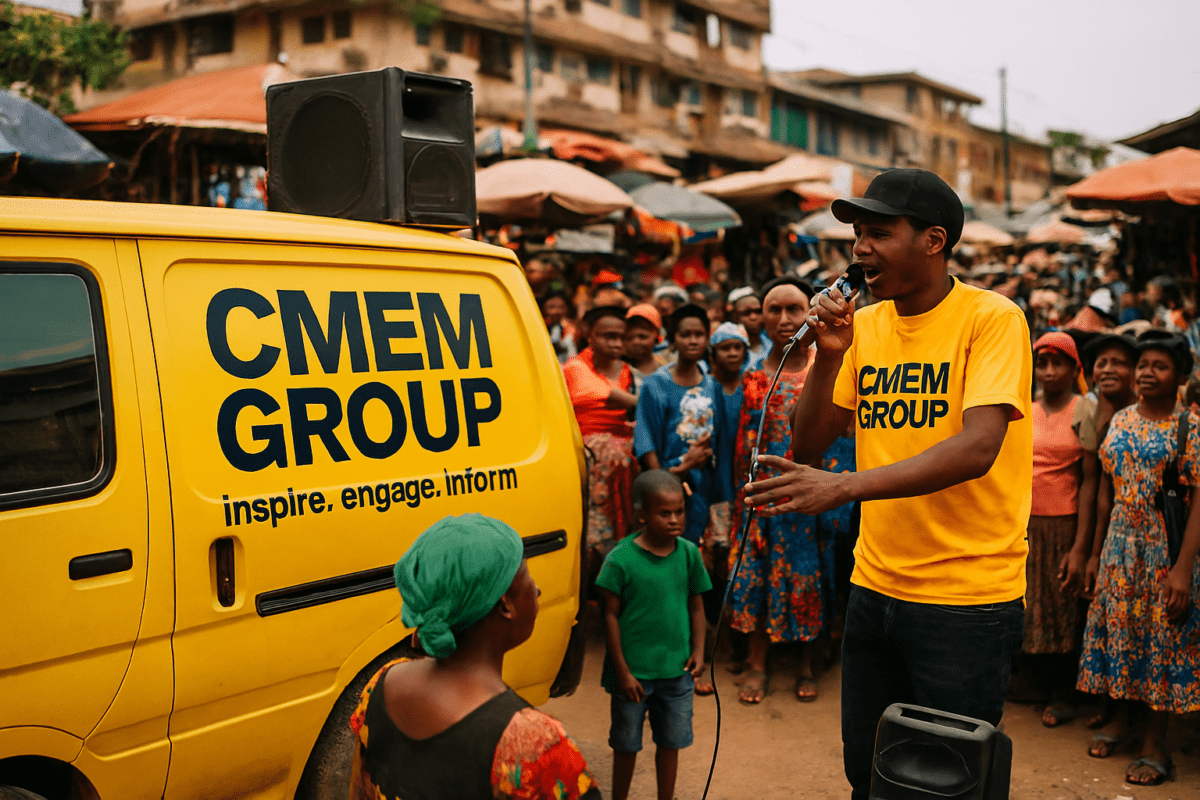
At CMEM Group, our work in experiential marketing, field execution and retail visibility sits close to young consumers in the places where they shop, gather and decide. That ground level view is what turns a generational label into usable market intelligence.
Research and References
- World Data Lab (2025): Gen Z emerge as biggest consumers as spend hits KSh 4.4 trillion in Kenya.
- Central Bank of Kenya, KNBS and FSD Kenya (2024): FinAccess Household Survey.
- FSD Kenya (2025): Youth Cohort Analysis from FinAccess.
- Boston Consulting Group (2025): 119 Million Reasons for Optimism: How Young Consumers Are Reshaping Africa’s Retail Future.
- Uganda Christian University (2024): The Impact of TikTok on Consumer Purchasing Behaviour.
- Afrobarometer (2025): Majority of youth see Uganda as moving in the right direction, but economic outlook is mixed.
- Afrobarometer (2025): Unlocking Tanzania’s potential: Youth look to jobs, entrepreneurial opportunities.
- National Institute of Statistics of Rwanda: Youth statistics and EICV7 findings.
Further reading: Communications Authority of Kenya, Quarterly Sector Statistics Reports; East African Community, Regional facts and statistics.
CMEM Group has been nominated. If our work has helped your brand, we would value your vote.
Behind this nomination are the field teams, activators and retailers we work with every day across Kenya, Uganda, Tanzania and Rwanda. Thank you for backing them.
Understand the Market. Connect with the Consumer.
At Centro, we believe effective marketing begins with understanding people, markets and the factors that influence decisions. From consumer and market intelligence to experiential marketing and regional campaign execution, the objective is to help brands make more informed decisions and build meaningful connections.

 Centro Insights