Kenyan brands following FIFA 2026 are making one critical mistake and it is costing them one of the biggest activation opportunities of the year.
And while millions of Kenyan consumers are following every match from the 10PM kickoffs they can manage to the 4AM fixtures they are catching on highlights most brands in Kenya are either absent from the moment entirely or activating around it the same way they did in Qatar 2022.
Both approaches are costing them.
The World Cup has changed. The timing has changed. The rules have changed. And the brands that don’t recognise this are running a playbook that no longer fits the game.
Here is what is actually happening and what it means for how brands in Kenya should be thinking about activation right now.
THE FIFA ADVERTISING BAN: THE RULE MOST KENYAN BRANDS DON’T KNOW EXISTS
One of the most significant marketing stories playing out during FIFA 2026 is one that rarely makes the local business press.
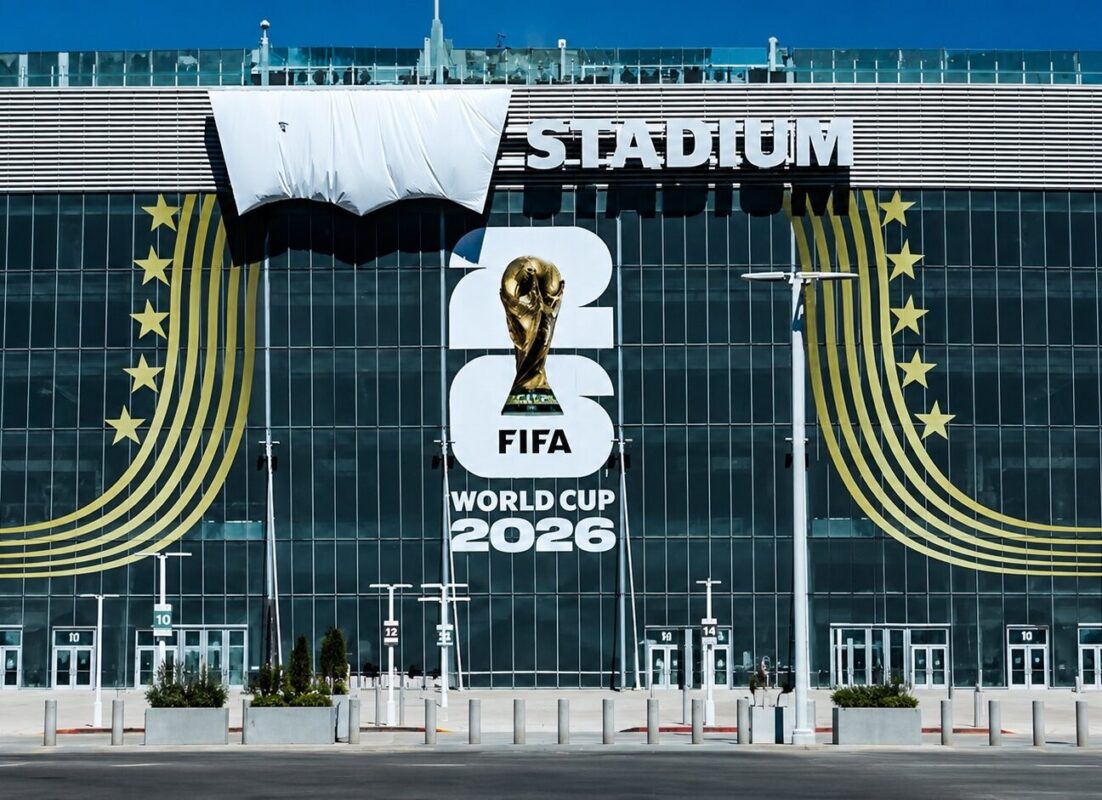
FIFA operates one of the most aggressive brand protection programmes in global sport. The terms World Cup and FIFA World Cup are registered trademarks. The logos, artwork, mascots, match footage, and even certain stadium designs are protected intellectual property, and FIFA enforces these rights actively.
This means that brands without official FIFA sponsorship rights cannot:
- Use FIFA logos, the World Cup trophy design, or tournament artwork in any marketing material
- Imply an official association through language like “official partner”, “sponsor”, or “supplier”
- Run promotions such as “Win a trip to the World Cup” without FIFA’s explicit permission
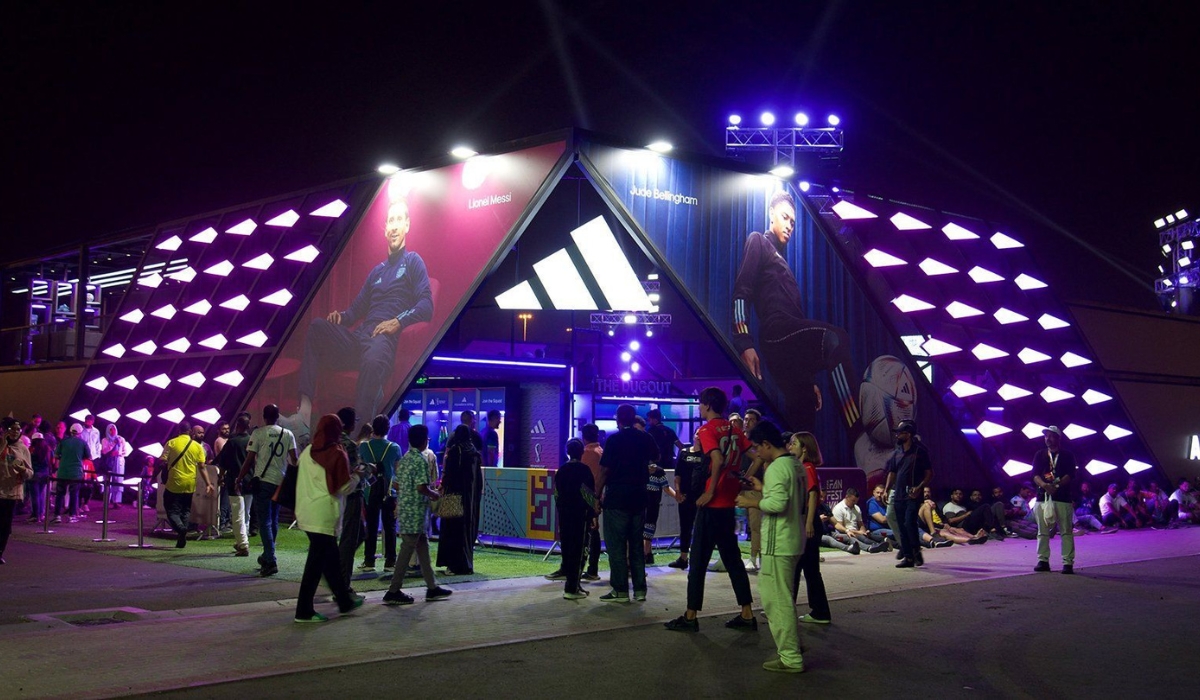
- Conduct direct consumer activations near official stadiums or fan zones on match days
- Use match footage or broadcast imagery in brand content without authorisation
FIFA treats ambush marketing as a direct threat to its commercial model the model that funds the entire tournament. Brands caught in violation face legal consequences.
For the world’s biggest brands competing for space in North America, this creates a significant constraint.
For brands in Kenya, it creates a significant opportunity.
The FIFA restrictions apply most stringently around official venues and fan zones in the host countries. In Kenya, the enforcement environment is different. Brands can activate around the World Cup energy, the football enthusiasm, and the cultural moment without the same level of restriction as long as they avoid FIFA’s protected marks and do not imply an official association.
Generic football themes, national colours, local fan culture, and the emotional energy of the tournament are all available to Kenyan brands right now. The brands smart enough to activate around this moment without crossing FIFA’s legal lines are accessing one of the highest-attention periods of the year at a fraction of the cost of an official sponsorship.
The window is open. Most brands in Kenya are not walking through it.
THE TIMING SHIFT: WHY THE 2022 PLAYBOOK DOESN’T WORK IN 2026
This is where most Kenyan brands and FIFA 2026 activation strategies are going completely wrong.
For brands that activated successfully around the 2022 FIFA World Cup in Qatar, the assumption may be that the same approach applies in 2026.
It doesn’t and this is where most activation plans are going wrong.
In 2022, Qatar hosted the tournament in the same time zone as Kenya. East Africa Time and Qatar Standard Time were perfectly aligned. Matches kicked off at times that suited Kenyan viewing naturally afternoons, early evenings, and prime-time slots that mapped directly onto after-work consumption occasions and retail activation windows.
Brand activations in 2022 could run during normal business hours, reach consumers at their most accessible, and align sampling and engagement moments with peak viewing audiences.
In 2026, the situation is fundamentally different.
With the tournament hosted across North America, match times in East Africa Time fall mostly between 10PM and 7AM. Of the 104 matches being played, only 45 fall in what can be considered a watchable evening window for Kenyan viewers between 6PM and midnight EAT. A full 52 matches kick off in the early hours of the morning 1AM, 2AM, 3AM, and 4AM.
Some of the biggest fixtures of the tournament are falling at times when most Kenyan consumers will either miss them entirely or catch them on highlights the following morning.
This changes everything about where and how brands should be activating.
WHAT THE TIMING SHIFT ACTUALLY MEANS ON THE GROUND
The 2026 World Cup is not creating fewer activation opportunities for Kenyan brands. It is creating different ones — and the brands that adapt will be the ones that convert.
Late night is the new prime time for certain categories.
The 10PM to 1AM window covers the most accessible matches for Kenyan viewers. It is concentrated in bars, restaurants, and informal viewing spaces — high-engagement environments where consumers are relaxed, socially primed, and open to brand interaction. For beverages, snacks, telecom data bundles, and betting brands, this is arguably the highest-quality activation window of the entire year.
The morning-after conversation is an activation opportunity.
For matches falling at 2AM, 3AM, and 4AM, the real consumer engagement moment is not during the game, it is the following morning. The commute conversation, the office discussion, the social media reaction. Brands that position themselves in the morning-after moment, through sampling at transit points, office-area activations, and morning consumption occasions, are reaching audiences at peak engagement without requiring anyone to stay awake until 4AM.
The 10PM matches are the sweet spot.
The evening matches starting at 10PM EAT are the closest equivalent to what Kenyan brands activated around in 2022. Watch party attendance peaks. Bar and restaurant footfall is highest. Consumer receptivity to brand engagement is strongest. Activations planned specifically around these fixtures will deliver the highest return.
Day-part planning matters more than ever.
Unlike 2022, where brands could run activations throughout the day and align them with match times, 2026 requires a more surgical approach. The consumer’s World Cup journey in Kenya starts in the evening and runs through the night, not during working hours. Activation planning that ignores this shift will miss the moment entirely.
WHY THIS IS EXACTLY THE WRONG TIME TO GO QUIET
The argument for pulling back on BTL activation during tight periods is always the same. It feels like discretionary spend. It is harder to measure than digital. It requires field teams, logistics, and management that can feel complex when budgets are under pressure.
But the evidence consistently tells a different story.
Brands that maintain BTL investment during periods when competitors are pulling back gain disproportionate share of consumer attention. When fewer brands are activating, the ones that show up stand out more not less. Consumer memory of brand interactions formed during high-emotion periods like a World Cup is significantly stronger than memory formed during neutral periods.
And in Kenya specifically, where the live, human, in-person brand interaction has always carried more influence than passive advertising, the cost of absence is higher than in almost any other market.
The brands that will look back at FIFA 2026 as a turning point in their Kenya market position are not the ones with the biggest budgets. They are the ones that understood the timing shift, adapted their activation approach, and showed up consistently while competitors were using the wrong playbook or not showing up at all.
Read our breakdown of the 5 BTL lessons from FIFA 2026: https://cmemgroup.com/btl-activation-kenya-fifa-world-cup-2026/
And why Kenyan consumers trust people more than brands: https://cmemgroup.com/kenyan-consumers-trust-people-more-than-brands/
THE BOTTOM LINE
FIFA 2026 is teaching brands several things simultaneously.
The biggest names in global marketing are investing heavily in human-led, experience-driven activation, even when digital channels are available and cheaper.
The brands locked out of official sponsorship are finding creative, legal, and effective ways to show up in the cultural moment without paying FIFA’s fees.
Consumer behaviour patterns in Kenya changed in 2022, so brands need a different approach to timing, occasion, and channel.
The brands that read these signals and act on them will not just navigate the current moment. They will emerge from it with stronger consumer relationships, better brand recall, and a more efficient activation model than the ones that went quiet and waited for conditions to improve.
Because in marketing, as in football, the teams that keep playing when the game gets difficult are usually the ones that win.
Is your brand showing up during FIFA 2026 — with the right timing, the right people, and the right approach?
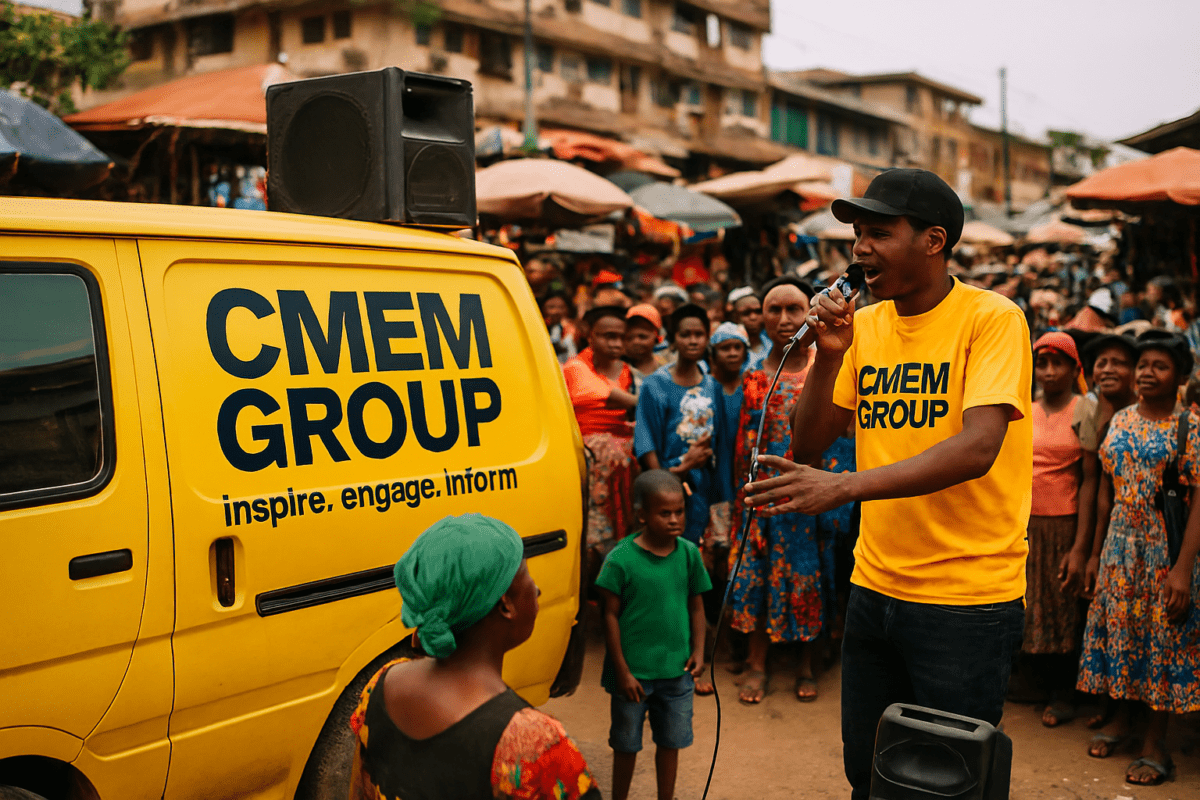
At CMEM Group we design and execute BTL activation strategies that adapt to the market moment and deliver measurable commercial results. Based in Nairobi, we work with brands across East Africa.
Let’s talk about your next activation.

 Centro Insights